YEAR END SALE!

Your Complete Wash Day Routine for a Clean Scalp and Soft Ends
The step-by-step routine that helped me reduce oiliness and stretch my wash days
Alia AS
11/6/20253 min read

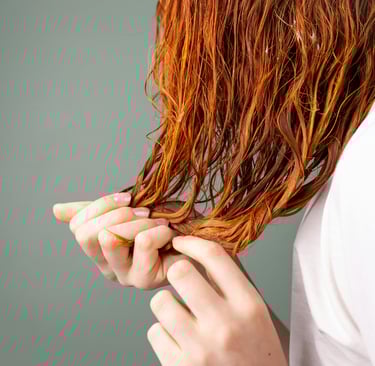
Wash day used to feel stressful for me.
My scalp would get oily so quickly, and no matter what I did, my hair always felt rough at the ends. I didn’t realise that the issue wasn’t the products — it was the way I was washing my hair.
Once I changed my wash day routine, everything started to improve. My scalp stayed fresher for longer, my ends became softer, and I could finally stretch my wash days without feeling uncomfortable or greasy.
Today, I want to share the exact routine that made the biggest difference.
Step 1: Detangle Before You Shower
This step prevents unnecessary breakage.
Before you even wet your hair, gently detangle it from the bottom up.
You can also use:
a small amount of pre-shampoo oil on your ends, or
your regular conditioner on mids and ends
This softens your hair and reduces friction when you shampoo later.
Be gentle. If your hair is stuck, don’t force it, work slowly.
Step 2: Shampoo Your Scalp (Only the Scalp)
This is the most important part.
You only need to shampoo your scalp, not your entire hair length.
The lengths will get clean when the shampoo runs down.
And yes — shampoo twice.
First wash:
Removes oil, sweat, and dirt.
You may notice less foam — that’s normal.
Second wash:
This is where the real cleanse happens.
You’ll see more foam and your scalp will feel truly fresh.
Massage gently with your fingertips (never your nails) to loosen buildup.
Rinse thoroughly until your scalp feels clean and light.
Step 3: Apply Conditioner to Mids & Ends Only
This step hydrates and softens your hair.
After rinsing out shampoo, squeeze out the excess water.
This helps the conditioner absorb better.
Then apply:
from mid-length
to the ends
avoiding the scalp completely
Leave it on for 3–5 minutes.
If you have time, wrap your hair with a warm towel for deeper absorption.
Rinse well so there’s no residue left behind.
Step 4: Towel Dry Gently
This is where many people accidentally damage their hair.
Avoid rough towel rubbing — it creates frizz and weakens your hair.
Instead:
use a microfiber towel or an old cotton T-shirt
gently squeeze the water out
Your hair will already feel smoother with this one small change.
Step 5: Apply Leave-In Conditioner (Mids to Ends)
Leave-in conditioner locks in the moisture from your shower.
Spray or apply it only to the mids and ends.
This keeps your hair soft, manageable, and less frizzy throughout the day.
If you have fine hair, choose a lightweight spray.
If you have medium or coarse hair, use a creamier formula.
Step 6: Detangle Again (Very Gently)
After applying your leave-in, use a wide-tooth comb to detangle your hair.
Start from the ends and slowly work your way up.
This helps spread the product evenly and makes your hair easier to dry.
Step 7: Air Dry or Blow Dry — Choose What Works for You
Both are fine. It depends on your lifestyle.
If you’re lazy or not in a rush, air drying is perfectly okay.
But personally, I prefer blow drying because:
my hair feels fresher for longer
the result is smoother
my natural waves form better
Just avoid heat-styling every single day.
It’s best to blow dry only on your wash days, not on Day 2 or Day 3.
Step 8: Apply Hair Oil to the Ends
Once your hair is dry, apply 1–3 drops of hair oil on the ends.
This protects your hair, reduces frizz, and keeps the ends soft and shiny.
Avoid your scalp — applying oil there will make you greasy faster.
Why This Routine Works
It balances two things your hair needs:
a clean, fresh scalp
hydrated, protected ends
When your scalp is clean, oil production starts to regulate.
And when your ends stay moisturised, they become softer, smoother, and less prone to breakage.
This routine is what helped me go from washing every other day to washing every 2–3 days comfortably.
If you want the full version, with product suggestions, ingredient explanations, and routines for different hair types, everything is inside my e-book Managing Oily Scalp and Dry Hair.
Alia AS